Wisteria Hysteria: How Lilac Vines Take Over London
From frosty snowdrops, to buttery daffodils, and sunny tulips, the early months of the year can be tracked by nature’s markers. As the days grow longer and the temperatures rise, we see the next herald of the season come into full bloom.
From frosty snowdrops, to buttery daffodils, and sunny tulips, the early months of the year can be tracked by nature’s markers. As the days grow longer and the temperatures rise, we see the next herald of the season come into full bloom.
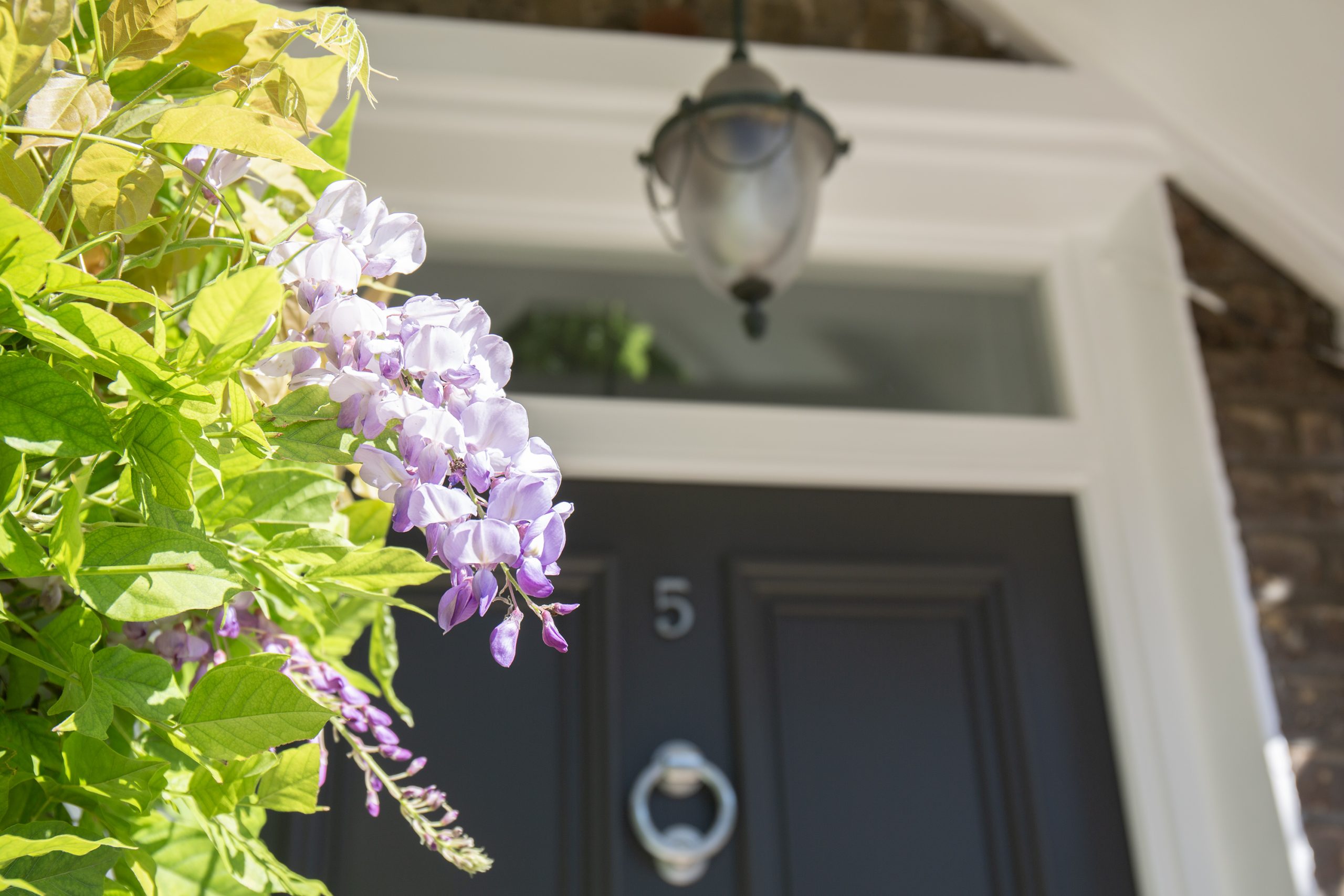
Wisteria is a remarkable plant, and for a few weeks every year, it explodes into glorious colour, decorating trellises and facades with its soft lilac tendrils.
Wisteria is also popular in some of London’s most desirable postcodes, leading to some “wisteria trails” being shared on social media, joining up some of the city’s most impressive examples of these beautiful plants in bloom.
Especially if you live in London, you’ll easily recognise the soft trailing tendrils of the lilac wisteria plant – but what makes it so popular?
A Nation of Wisteria Lovers
Wisteria comes in a range of tones, from the classic lilac to soft pinks, dusty blues, and bright whites. In autumn, wisteria also displays beautiful golden foliage before shedding for winter.
When it blooms in spring, the beautiful fragrance of wisteria carries through the streets, and it also attracts butterflies at the height of its bloom, with their fluttering wings just another injection of the magic and colour that the plant is known for.
For historical romance lovers, the popularity of Bridgerton on Netflix is another high point for wisteria, with the façade of the titular family’s home perpetually shaded in lilac blooms. While the wisteria-clad frontage of Bridgerton house was created with movie magic (scaffolding and silk flowers covered the exterior of Ranger’s House in Greenwich), it’s inspired a new generation of gardeners – eBay reported a 300% increase in sales of wisteria after the show’s debut in 2021.
The stunning colours and fresh scent of Wisteria are a big part of its popularity, but it’s the fleeting nature of these cascading petals that makes “wisteria hysteria” an annual event.
Wisteria generally only blooms for a few weeks a year – starting in late April and ending in mid-May in the south – with more northerly gardens following just a couple of weeks behind. By mid-June, most wisteria will be done with its flowering season for the year.
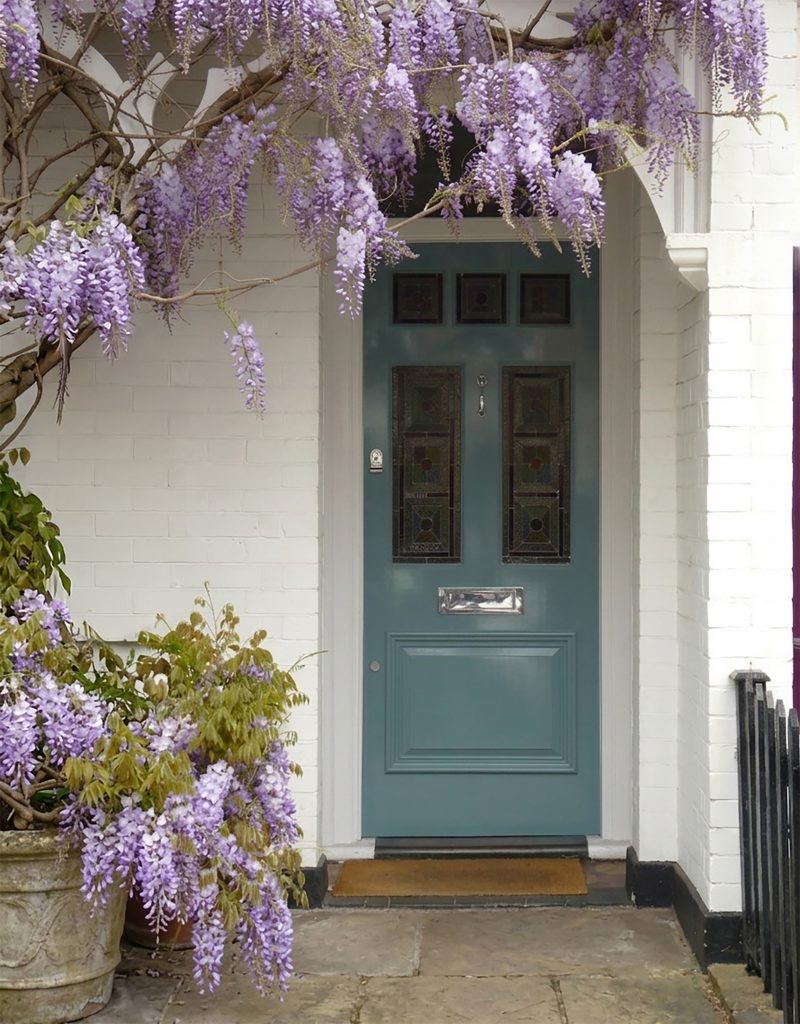
The Wisteria Doors of London
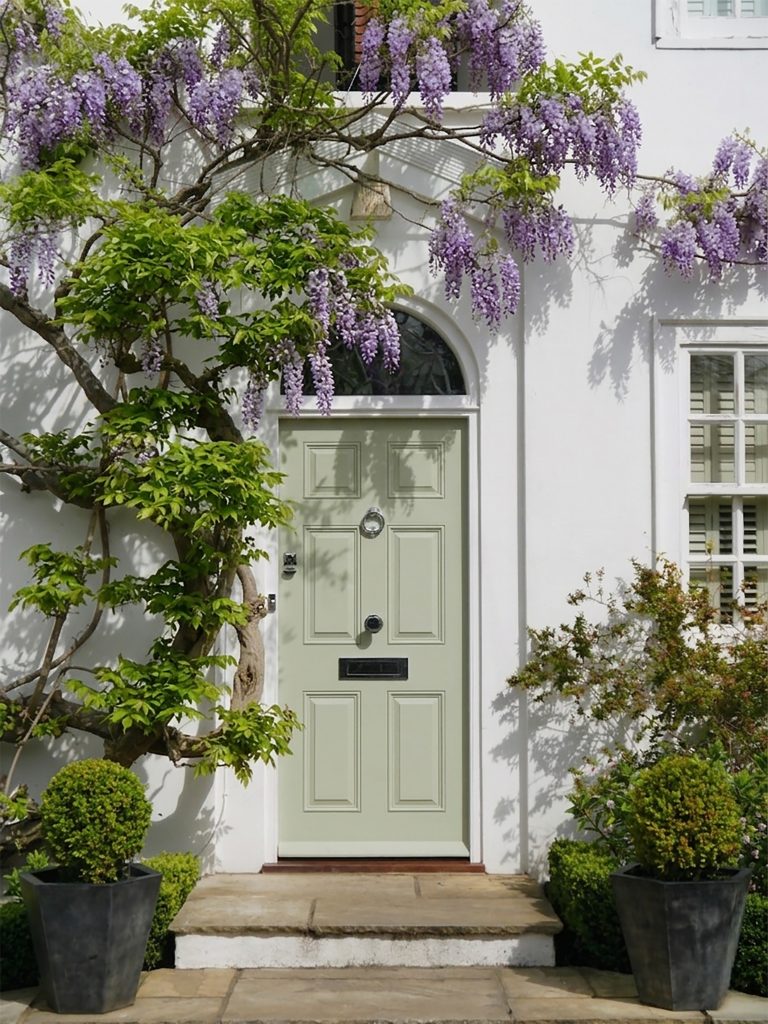
Wisteria climbing up the iconic white townhouses in London is a picturesque scene, and for many Londoners, it’s a tangible marker in the year that summer is on the way.
Some of London’s most famous postcodes are known as the best places to see wisteria in full bloom, with Notting Hill, Chelsea, and Chiswick all home to incredible flowering displays.
For these properties, a backdrop that complements wisteria when it comes to bloom and all eyes are on you but still stands on its own year round is something that requires careful consideration.
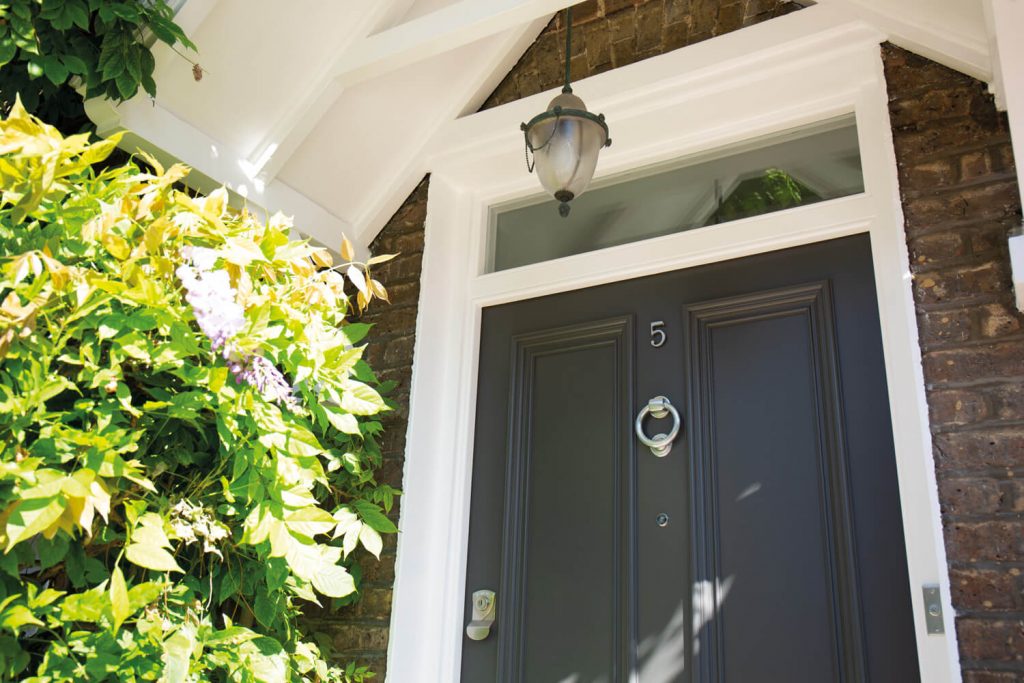
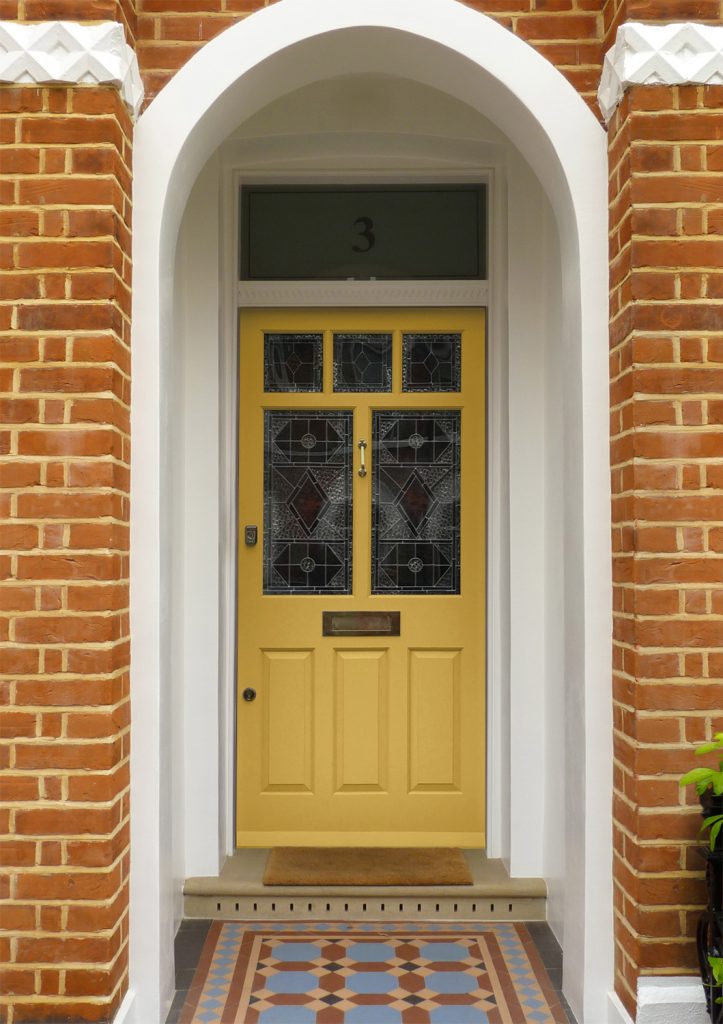
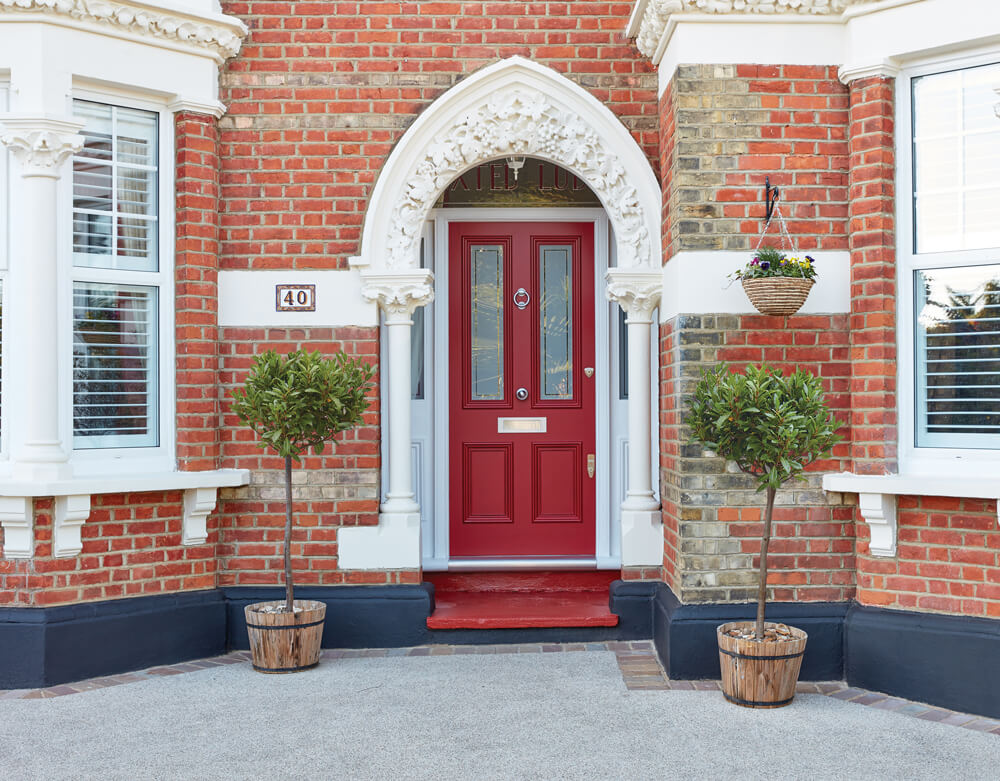
Colour Pairings: The homes in these areas are often whitewashed or feature that ochre brickearth tone that’s a hallmark of Georgian and Victorian London properties. Soft neutrals and chalky whites work well on front doors here, letting the architecture and the plants do the talking. Alternatively, heritage greens, deep charcoals, and muted blues can all work by creating contrast with the lilac tones of the wisteria.
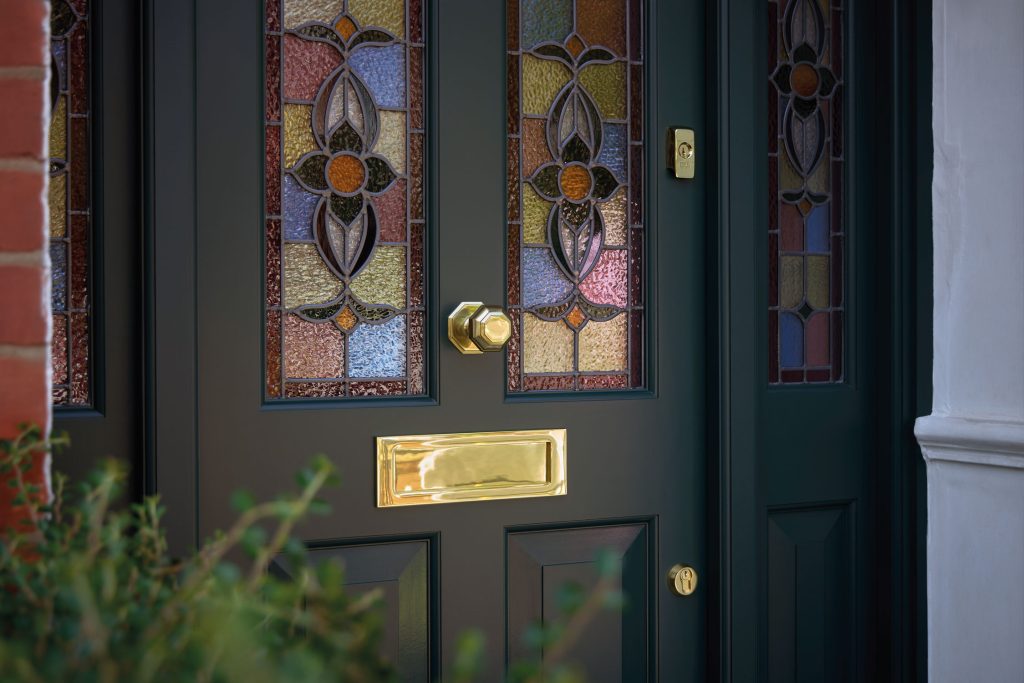
Materials: The most beautiful wisteria-clad homes are often historic buildings which suit natural timber entrances with subtle texture, rather than more modern-styled doorways. Painted finishes bring personality and contrast yar-round.
Balance: Creating a balanced, architectural door and entryway lets the organic, twisting vines of the wisteria create unique shapes and interest, while the door itself provides architectural structure.
Of course, the question on many homeowners’ lips at this time of year: “Can I plant wisteria in my home?”
Planting Wisteria in Your Home
While the charm of a wisteria in full bloom is undeniable, it’s a commitment that deserves careful thought.
When it thrives, wisteria can dramatically enhance kerb appeal and even add to a property’s perceived value. However, patience is essential as it can take anywhere from five to fifteen years for a plant to flower, unless you opt for a grafted variety for earlier results. Wisteria is also a vigorous grower that can affect other plants in its vicinity, so requires regular pruning and maintenance to keep it in check.
With so many varieties available, researching the right type for your space is key.
And even as wisteria hysteria comes to an end, great front door design endures. Request a brochure to discover how your entrance can transform your home, whatever the season.