The finishing touch made easy with the London Door Company.
The finishing touch made easy with the London Door Company.
It’s taken a whole lot of time, money, and disruption, but now the end is in sight.
Throughout your period home renovation, you’ve navigated the architects, the builders, the tile samples, and the paint swatches. You’ve made hundreds of decisions, and you’re finally nearly there.
The front door shouldn’t be the thing that trips you up.
A Finishing Touch, Not an Afterthought
The exterior of your home sets the expectations before anyone steps inside, so it has to feel right.
Decision fatigue is real, and it tends to strike hardest towards the end of a renovation, when you’re tired of choosing. Anything that doesn’t feel essential gets waved through. Your home’s exterior is often the casualty.
This is particularly true of period homes, where the distinctive facades that feel so at home on London streets can be undermined by a single mismatched door.
That mismatch affects kerb appeal, and it creates something subtler too: a halo effect. When something feels off right at the entrance, visitors and potential buyers can carry that feeling inside with them, whether they realise it or not.
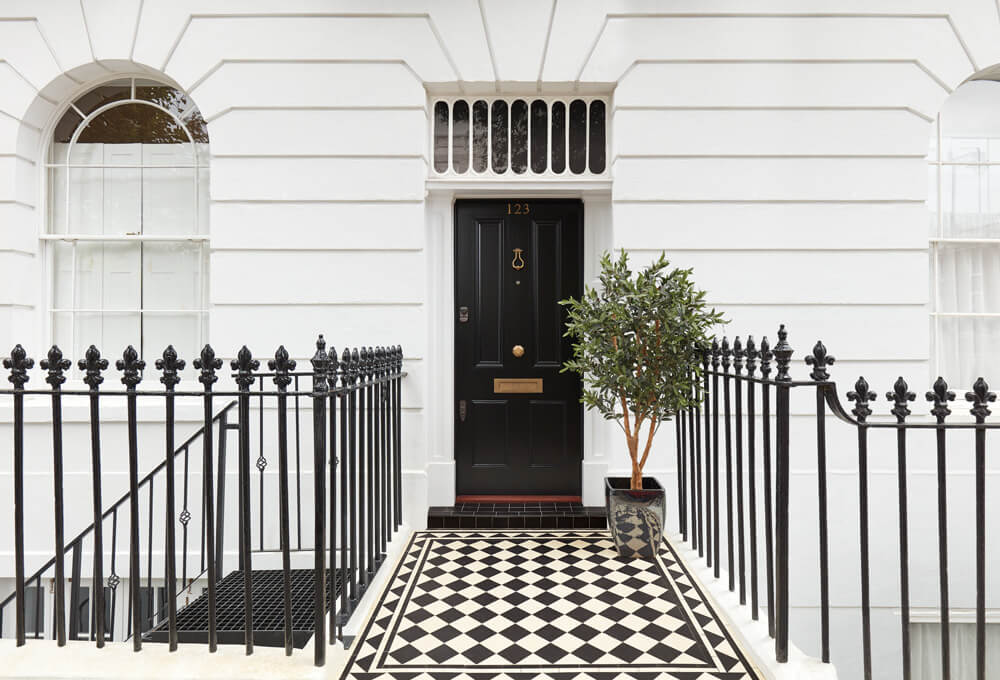
In the Georgian era, spanning from 1714 to 1830, symmetry in design is everything. Doors in this era are formal and balanced, often surrounded by Greco-Roman inspired pillars and pediments – take a trip to Bedford Square and you’ll see this style in all its glory.
Traditionally, doors in this era were in fairly neutral tones, with blacks, whites, and greys, but blues, like navy and soft blue tones in particular, were also incredibly popular.
Victorian
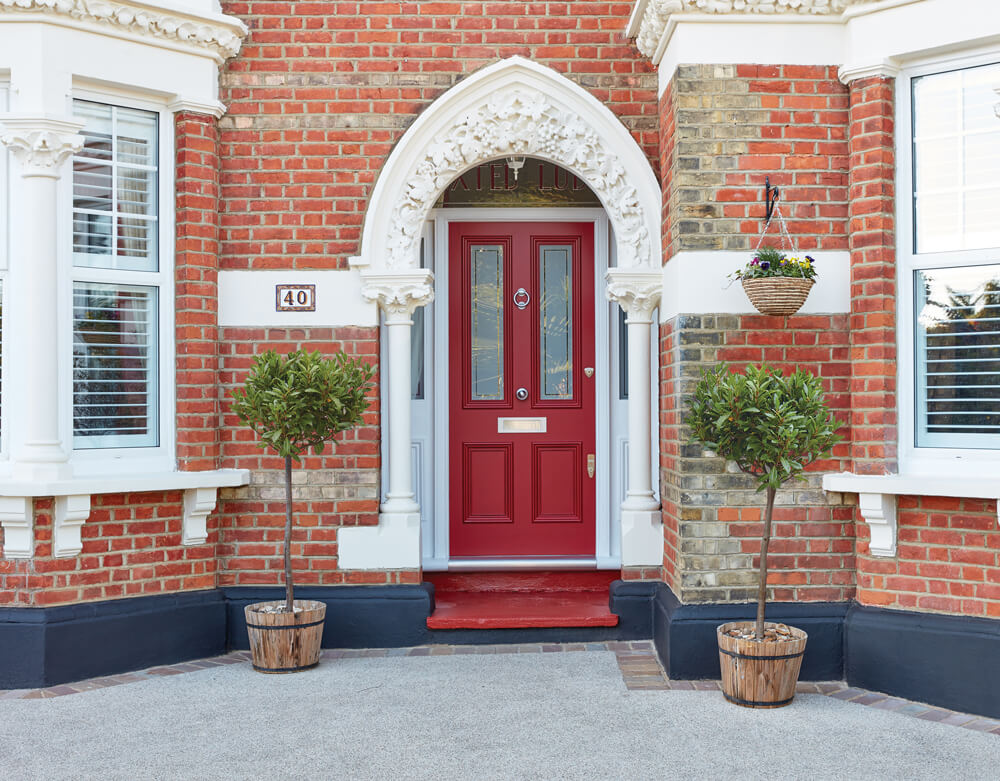
Victorian homes were built between 1837 and 1901 and, as the city grew rapidly during that period, are a mainstay of London housing stock. They’re easy to recognise from the street, with red brick, ornate gables and bay windows all popular architectural features from the time.
Social mobility increased in the Victorian era, so we see an increase in ornate, detailed, and artisan crafts across all parts of Victorian life as people made outward displays of their wealth – clothing, wallpaper, lamp-posts, architecture and more all got the Victorian makeover.
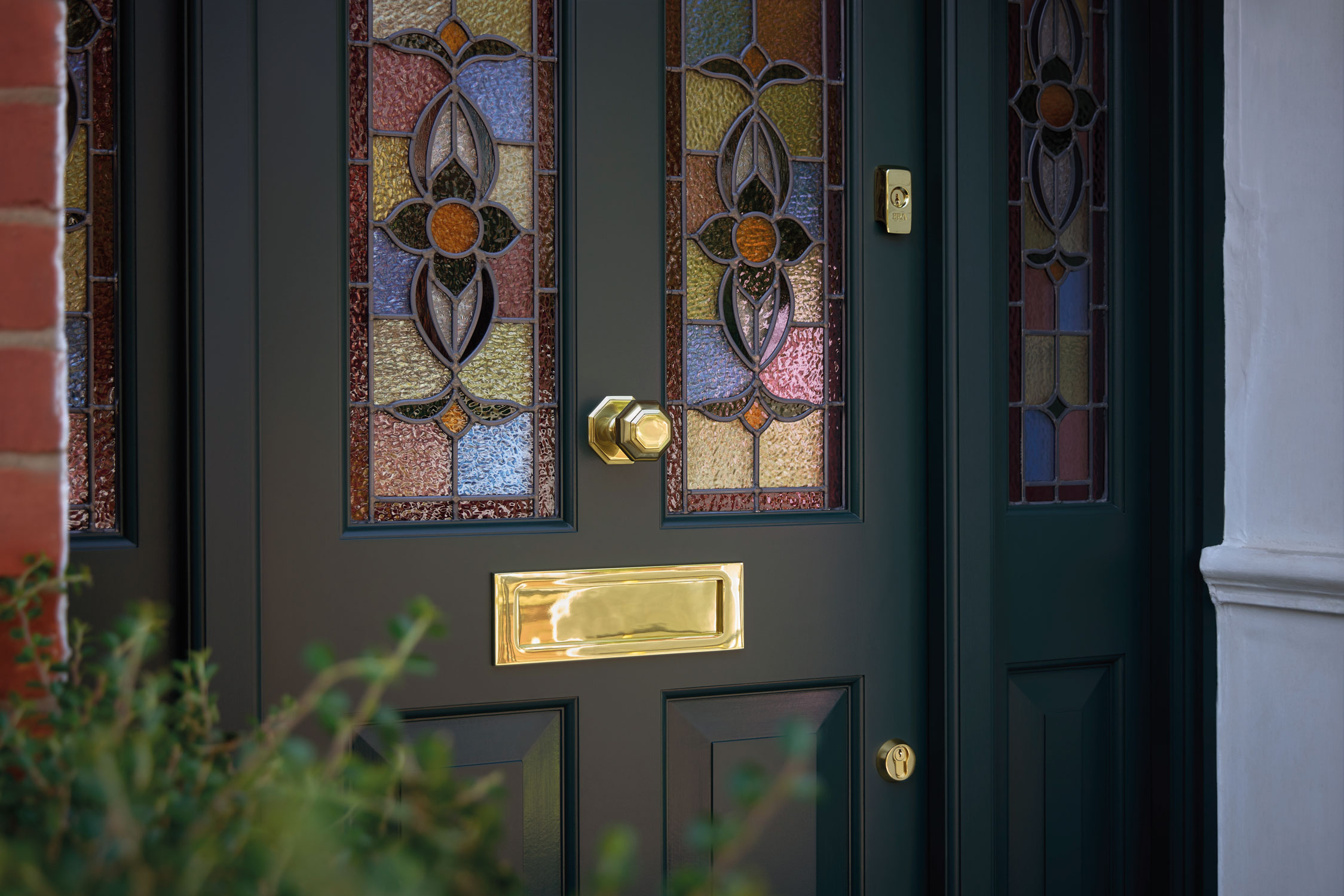
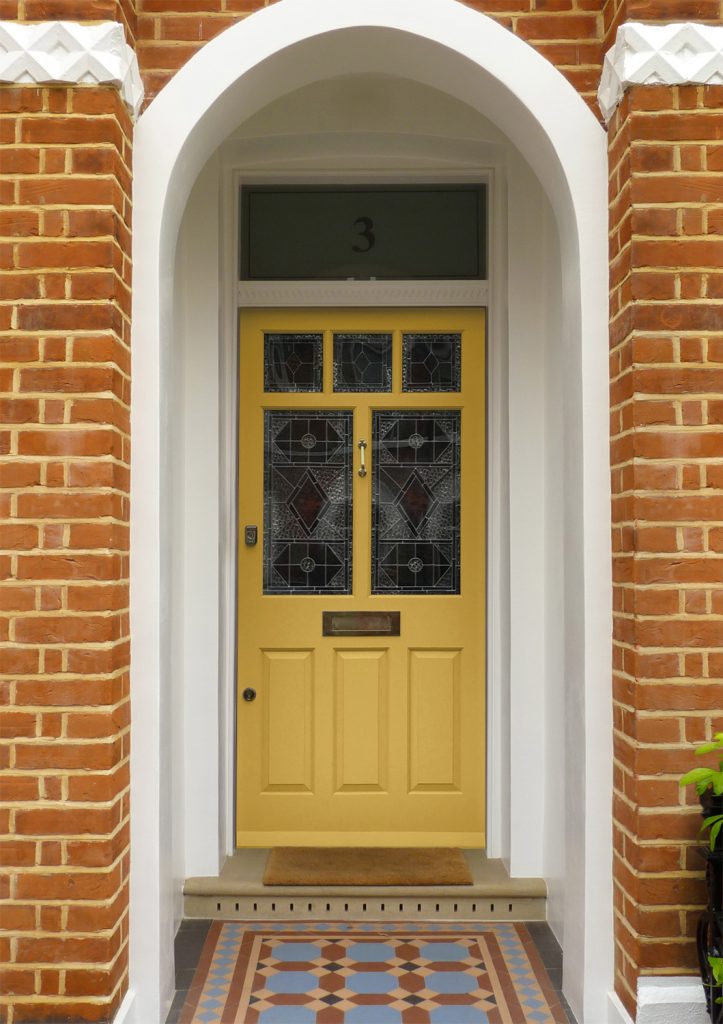
This means that Victorian doors are often quite ornate compared to other eras, with 4-6 panels, detailing, and intricate, nature-inspired stained glass features in fanlights and sidelights all common.
Edwardian
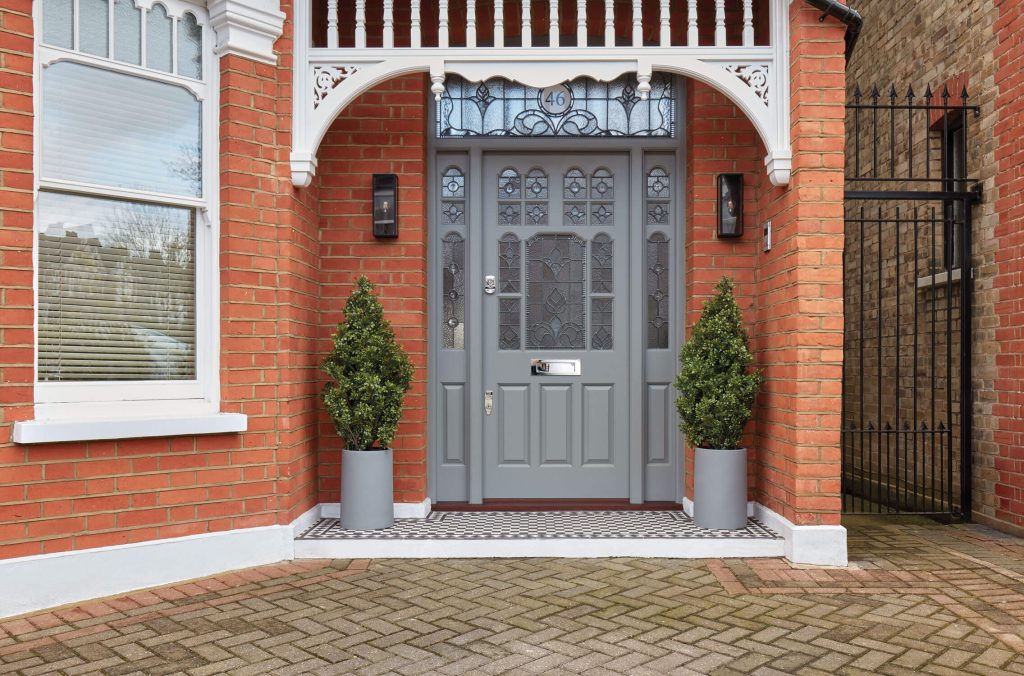
At the turn of the 20th century, architecture shifted to be less about pomp and presence, and more about creating spaces that felt good to live in. Doors and hallways prioritised balance and letting natural light in, and are generally slightly wider than their earlier counterparts.
Flowing, art nouveau-inspired stained glass panels were all the rage, letting the light in while embracing the more organic visual styles of the era.
1930s
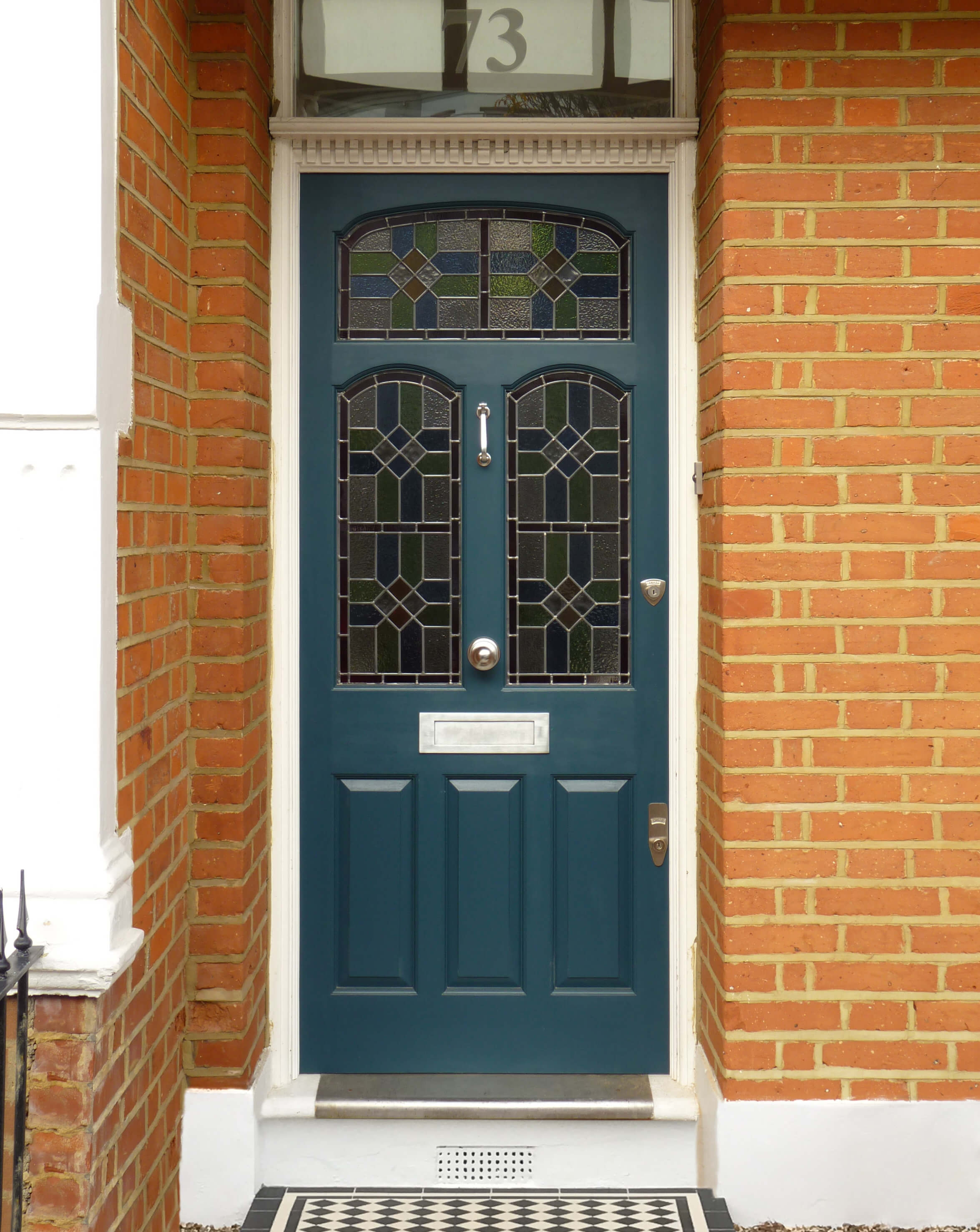
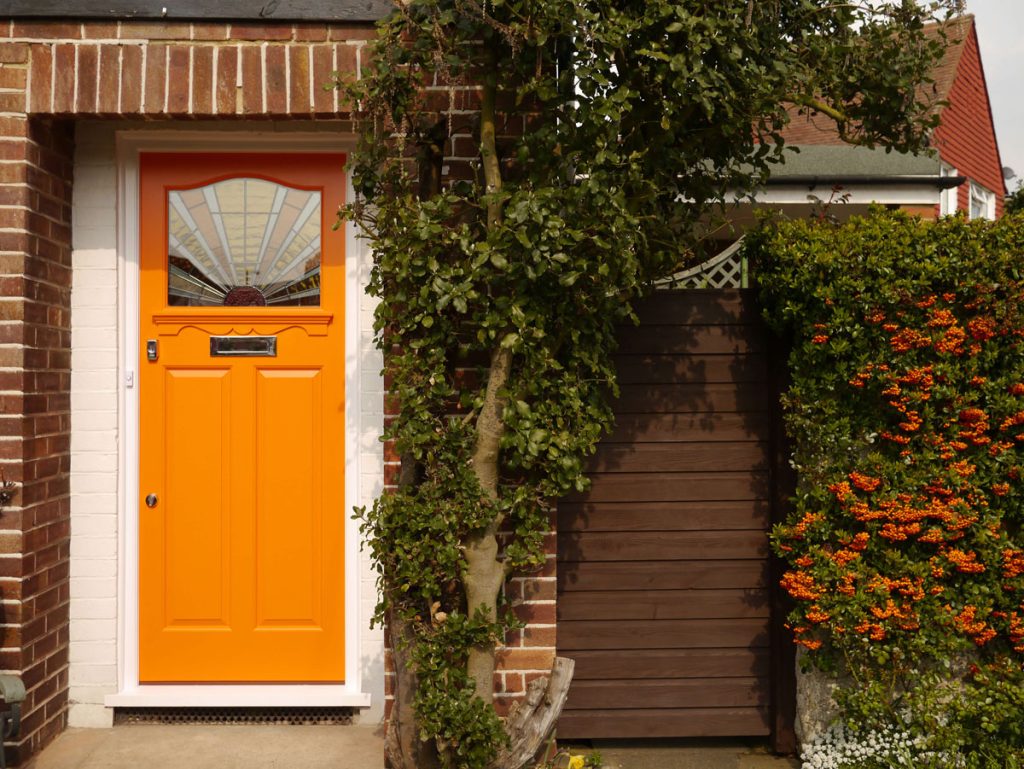
Art deco style was in full swing in the 1930s, and doors of the period reflected this perfectly. Sun-shaped fanlights and a return to tall, slender proportions were the popular styles, with stained glass in the top third a common design to create that elongated appearance.
Advancing techniques meant that stained glass designs were more creative than ever, giving contemporary homeowners the chance to showcase creativity and really express themselves in this style of door.
Where Period Homeowners Go Wrong
Even with the best intentions, there are plenty of common pitfalls when designing for a period property – these are just a few that our designers often encounter:
Chasing trends over an architectural match
The match between social media trends and what your house actually needs are rarely the same thing. In a period home, the mismatch is hard to hide.
Treating hardware as an afterthought
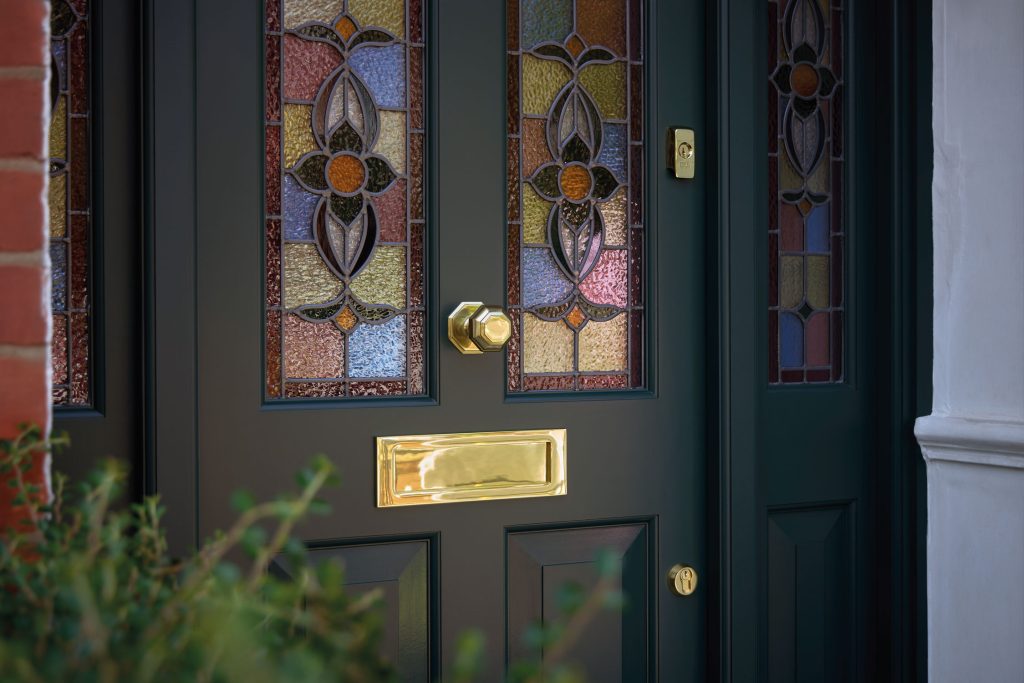
Like so many things when it comes to home interiors, the devil is in the details. The wrong handle, knocker, or letterplate can undermine an otherwise perfect door. Door hardware should always be chosen with the era of the property in mind. As the finishing touch of your finishing touch, it deserves the same care as everything else.
Misjudging the glazing
While stained glass is a fantastic canvas and creative outlet, it’s important to remember that different eras took as different an approach to glazing as they did everything else. From Georgian restraint to Victorian ornamentation and Edwardian openness, there’s a historic style attached to every era. Glazing that ignores this will jar, however right the rest of the door feels.
The Finishing Touch: A Door That Matches Your Home
After everything you’ve invested in your renovation – in time, in money, in care – your front door should be the detail that pulls it all together.
At the London Door Company, we work with homeowners at that pivotal, final stage of home renovation. Our designers understand that a front door, especially for a period property, isn’t chosen in isolation. It has to answer a set of questions that are specific to your home: What does your era demand in terms of proportion and panel configuration? How does the door sit within the broader exterior? How does it play with the render colour, the path materials, the windows either side?
These aren’t questions with off-the-shelf answers, which is why we don’t offer off-the-shelf consultations in our home design visits. Our designers offer friendly advice and expert clarity on your unique project, with the tools to help you visualise your new door clearly, and the design skills to ensure it fits not just your home, but your personality too.